CONNECT
Astronaut Teamwork Test
B2/C1 video lesson on intelligent teamwork, leadership, communication and problem-solving under pressure.
Lesson Overview
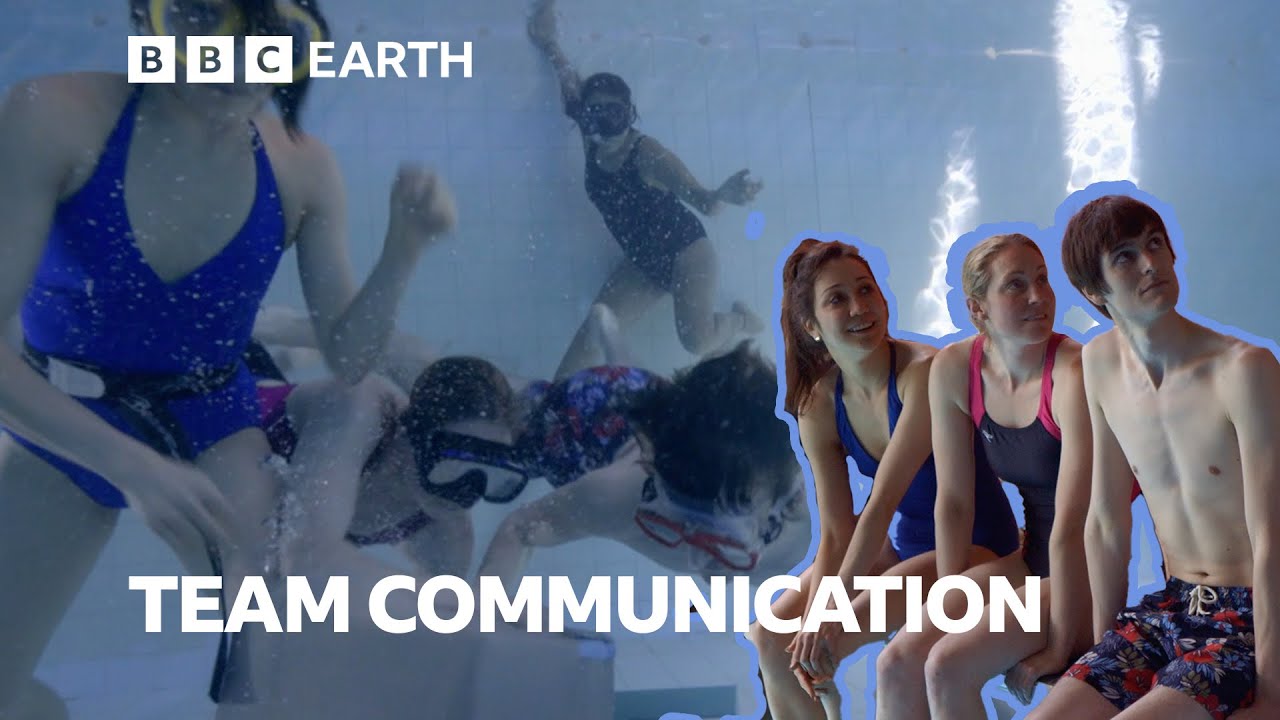
Students watch a video about astronaut candidates completing a teamwork test underwater. The task seems simple — building a cube from seven pieces — but limited time, breath control, non-verbal communication and unclear roles make it extremely difficult.
Before you watch
- What makes a team work well under pressure?
- Is leadership more important than individual intelligence?
- What problems might occur if a team cannot communicate clearly?
Prep for Part 1
Drag the correct sentence ending into each gap.
Sentence endings
they use their thinking skills to solve a problem. it recreates some conditions similar to working in space. different people take responsibility for different tasks. they have natural skill or intelligence.Watch Part 1
Watch from 0:01 to about 1:43. Focus on the task, the rules, communication, role distribution and why the pool makes the challenge difficult.
 Watch Part 1 on YouTube
Comprehension 1
Click each question to reveal the answer.
Vocabulary from Part 1
Astronauts need more than raw .
The candidates must apply their to solve problems.
A good team will distribute .
Underwater, they have to communicate non-.
Options
ability intelligence roles verbally cubePrep for Part 2
Drag the correct sentence ending into each gap.
Sentence endings
messages are clear and people understand what to do. it is confused, badly organised or not working together. they are no longer confident that their judgement is right. they decide to do it without enough help from the team.Watch Part 2
Watch from about 1:43 to the end. Focus on Tessa’s role, the team struggling, Merritt trying alone and the final reflection.
Watch Part 2 on YouTube
Comprehension 2
Click each question to reveal the answer.
Vocabulary from Part 2
The team is struggling with 3D .
When the team is in , Merritt works alone.
Chris says Merritt’s action is not very .
Tessa says communication was not .
Options
visualisation disarray directed effective physiologyVocabulary Review
| Word / phrase | Meaning | Example |
|---|---|---|
| raw ability | natural skill or intelligence | Astronauts need more than raw ability. |
| proven ability | skill that has already been demonstrated | The test looks for proven ability under pressure. |
| apply intelligence | use thinking skills practically | Candidates must apply intelligence to solve problems. |
| intelligent teamwork | teamwork that uses clear thinking and coordination | The test measures intelligent teamwork. |
| distribute roles | give different responsibilities to different people | A good team distributes roles clearly. |
| space-like environment | conditions similar to working in space | The pool creates a more space-like environment. |
| physiology | how the body works | They are up against their own physiology. |
| non-verbally | without spoken words | They must communicate non-verbally underwater. |
| 3D visualisation | imagining shapes and movement in three dimensions | The cube task tests 3D visualisation. |
| in disarray | confused or badly organised | The team was in disarray. |
| take on something alone | try to do something without support | Merritt tried to take on the cube alone. |
| effective communication | communication that works clearly and successfully | Tessa felt communication was not effective. |
Collocations and Expressions
raw
proven
intelligent
distribute
hold your
limited
effective
Options
ability teamwork roles breath time communicationPhrasal Verb Exercise
Complete the sentences with the correct phrasal verbs and expressions.
The pieces fit into a cube.
One candidate stays on the surface to direct the team .
Suzy goes over to catch .
Merritt tries to take the cube alone.
Tessa feels she should have got them to listen .
Options
together from above her breath on to her offPhrasal Verb Exercise 2: Form Questions
Use the same expressions to complete the questions. Then discuss your answers.
1. How can a team fit different skills effectively?
2. Is it useful for one person to direct a team ?
3. What should someone do if they need to catch during a stressful task?
4. When is it a mistake to take a problem alone?
5. How can a leader get people to listen without becoming too forceful?
Options
together from above their breath on to themB2/C1 Grammar: Past Modals for Reflection
This grammar section practises language for reflecting on poor teamwork and saying what should, could or might have happened differently.
| Function | Pattern | Example |
|---|---|---|
| Criticising past action | should have + past participle | They should have talked more before starting. |
| Missed possibility | could have + past participle | They could have distributed roles more clearly. |
| Uncertain past possibility | might have + past participle | They might have done better with clearer signals. |
| Negative reflection | shouldn’t have + past participle | Merritt shouldn’t have tried to solve it alone. |
Grammar Exercise 1: Drag the correct phrase
The team a strategy before starting.
They clearer roles.
Merritt on the cube alone.
Tessa more confident about her judgement.
The team clearer hand signals.
Options
should have discussed could have assigned shouldn't have taken might have been could have used should to talkGrammar Exercise 2: Error Correction
Click each sentence to reveal the correction.
Grammar Exercise 3: Sentence Transformations
The team did not talk enough before the test.
They did not use clear hand signals.
Merritt tried to solve the cube alone.
Useful Patterns
| Purpose | Useful language |
|---|---|
| Reflecting on mistakes | We should have... / We shouldn’t have... |
| Suggesting alternatives | We could have... / Another option would have been to... |
| Uncertain judgement | It might have helped if... / We might have done better if... |
| Team feedback | Communication wasn’t as effective as it could have been. |
Discussion
- What was the biggest problem in the team’s performance?
- Should one person have led from the surface, or should everyone have shared leadership?
- Is it ever a good idea to take on a team problem alone?
- What makes communication difficult under pressure?
- How can teams prepare for situations where they cannot speak?
- What should the team have done differently?
Useful Language for Discussion
| Giving an opinion | Reflecting on mistakes | Suggesting improvements |
|---|---|---|
| I’d argue that... From my perspective... What stands out to me is... |
They should have... They could have... It might have helped if... |
Next time, the team should... A better approach would be... They need clearer... |
Role Play: Team Debrief
Student A: Team leader
Explain what the team should have done differently. Focus on communication, roles and listening.
Student B: Team member
Explain the pressure you felt. Defend some decisions, but accept one thing you could have done better.
Challenge
Use at least three past modal phrases from the grammar section.
| Team leader language | Team member language |
|---|---|
| We should have agreed on... We could have used... Communication wasn’t as effective as... |
I might have focused too much on... I shouldn’t have... Next time, I would... |