CONNECT
3D Food Printing: The Future of Cooking?
B2/C1 video lesson on food technology, software-controlled cooking and innovation.
Lesson Overview
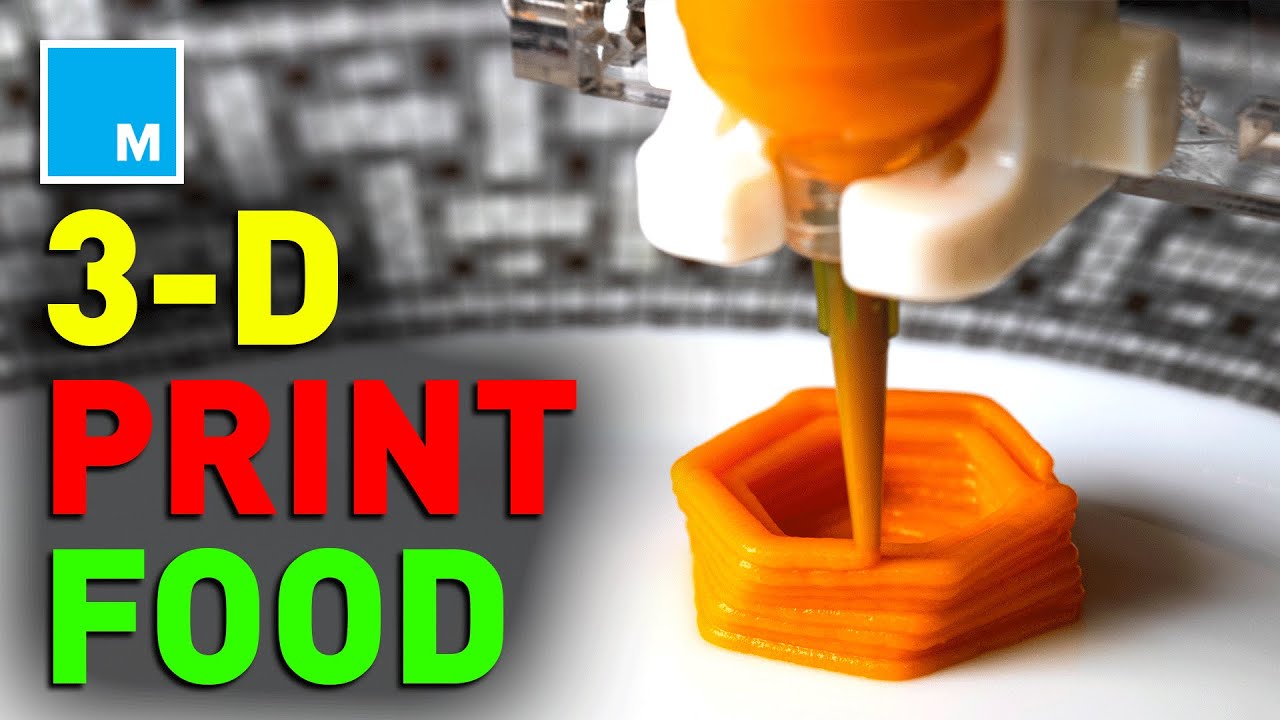
Students watch a video about 3D food printing, software-controlled cooking and laser cooking. The lesson explores how digital tools could change food design, textures, ingredients and the future of cooking.
Before you watch
- Would you eat food made by a 3D printer?
- What problems could digital cooking solve?
- Is food printing a gimmick or a serious innovation?
Prep Part 1
Drag the correct sentence ending into each gap.
Sentence endings
a computer program decides how the process works.it feels different in the mouth.there are almost no limits to what is possible.it places small amounts of food material in a controlled way.Watch Part 1
Watch from 0:00 to about 1:35. Focus on how the printer deposits ingredients, uses lasers and controls the cooking process with software.
 Open video
Comprehension 1
Click each question to reveal the answer.
Vocabulary from Part 1
The machine deposits food .
It cooks the food with .
The process is controlled by .
The technology can create new food .
Options
ingredientslaserssoftwaretexturespatternsPrep Part 2
Drag the correct sentence ending into each gap.
Sentence endings
it can create very small and precise details.ordinary people can access and use it.it is new, unexplored or not well understood.it is crushed or blended into tiny pieces or paste.Watch Part 2
Watch from about 1:35 to the end. Focus on food CAD, investors, innovation and the move from manual to software-controlled cooking.
Open video
Comprehension 2
Click each question to reveal the answer.
Vocabulary from Part 2
Raw salmon can be turned into a .
The printer uses loaded .
The laser beam is directed by galvo .
The field is relatively .
Options
pastecartridgesmirrorsunchartedwavelengthVocabulary Review
| Word / phrase | Meaning | Example |
|---|---|---|
| deposit | place a substance somewhere | The printer deposits ingredients in fine patterns. |
| fine pattern | a detailed, precise arrangement | The ingredients are arranged in fine patterns. |
| software-controlled | controlled by a computer program | The cooking process is software-controlled. |
| the sky’s the limit | almost anything is possible | With software control, the sky’s the limit. |
| texture | how food feels in the mouth | The printer can create new food textures. |
| pulverise | crush or blend into tiny pieces | Raw salmon can be pulverised into a paste. |
| cartridge | a container loaded into a machine | Ingredients are placed into cartridges. |
| high resolution | very detailed and precise | The printer deposits food at high resolution. |
| wavelength | a property of light that affects how it behaves | The laser wavelength affects cooking. |
| browning | making food brown through cooking | Some settings create browning. |
| penetrative cooking | cooking that reaches deeper into the food | Different lasers allow more penetrative cooking. |
| run the gamut | include a wide range | The ingredients run the gamut from dough to salmon. |
| uncharted | not explored or understood yet | The space is relatively uncharted. |
| food CAD | software for designing food digitally | Food CAD could let non-programmers design meals. |
| democratise | make something available to more people | The aim is to democratise software-controlled cooking. |
Collocations and Expressions
raw
cooking
food
laser
software
manual to software
Options
ingredientprocessresolutionbroiltechniquescontrolPhrasal Verb Exercise
The printer puts ingredients in fine patterns.
The cartridges are loaded before printing.
The machine moves the cartridges .
The ingredients run from dough to salmon.
The speaker wants to move a new way of making food.
Once cooking becomes digital, he says we won’t look .
Options
togetherinaroundthe gamutintobackoffPhrasal Verb Exercise 2: Form Questions
What kinds of ingredients could be put by a food printer?
Would you feel comfortable if raw ingredients were loaded by cartridge?
How could software move ingredients to create new designs?
Could printed food run from snacks to restaurant meals?
Are we moving a future where cooking becomes digital?
Once people get used to digital cooking, will they look ?
Options
togetherinaroundthe gamutintobackB2/C1 Grammar: Future Possibility and Innovation
This grammar section practises language for describing new technology and future possibilities.
| Function | Pattern | Example |
|---|---|---|
| Future possibility | could / might + verb | Food printers could create textures we cannot imagine. |
| Result of a condition | Once + clause, you can... | Once cooking is controlled by software, you can design new foods. |
| Purpose | allow someone to + verb | Food CAD allows non-programmers to design foods. |
| Contrast | not about..., but about... | This is not about cooking faster, but about creating new food. |
Grammar Exercise 1: Drag the correct phrase
Food printers new textures.
Once the process is software-controlled, people new foods.
Food CAD allows non-programmers the machine.
This is not about doing things faster, making new foods.
Laser settings might browning and penetrative cooking.
Options
could createcan designto controlbut aboutaffectto affectingGrammar Exercise 2: Error Correction
Click each sentence to reveal the correction.
Grammar Exercise 3: Sentence Transformations
Food printers may create new textures in the future.
Cooking becomes controlled by software. People can design new meals.
The technology is not mainly for speed. It is for creating new possibilities.
Useful Patterns
| Purpose | Useful language |
|---|---|
| Explaining innovation | This technology allows people to... / It opens up the possibility of... |
| Describing potential | It could lead to... / It might make it possible to... |
| Responding to criticism | It may not solve an obvious problem, but... |
| Comparing old and new | This shifts cooking from manual to software control. |
Discussion
- Would you trust food cooked by lasers and software?
- Is 3D food printing solving a real problem?
- Could this technology help restaurants, hospitals or people with special diets?
- What might be lost if cooking becomes more digital?
- Would food CAD make cooking more creative or less human?
- What new food textures or designs would you like to create?
Useful Language for Discussion
| Giving an opinion | Evaluating innovation | Speculating |
|---|---|---|
| I’d argue that... From my perspective... What stands out to me is... | It solves a real problem because... It feels more like a gimmick because... The main advantage is... | It could lead to... It might change the way we... In the future, people may... |
Role Play: Pitching a 3D Food Printer
Student A: Founder
Explain why software-controlled cooking can create new textures, personalised meals and new possibilities.
Student B: Investor
Question whether people need this technology. Ask about cost, taste, safety, demand and practical use.
Challenge
Use at least three phrases from the grammar section.
| Founder language | Investor language |
|---|---|
| This technology allows people to... It is not about..., but about... It could lead to... | What problem is this solving? It might be too expensive because... Once people try it, will they...? |