B2 — Upper Intermediate

Talking About Films and TV

B2 level  ·  40-minute interactive lesson
1
2
3
4
5
6
Stage 1 — Warm-up
Film as art and entertainment
5 minutes · Critical discussion
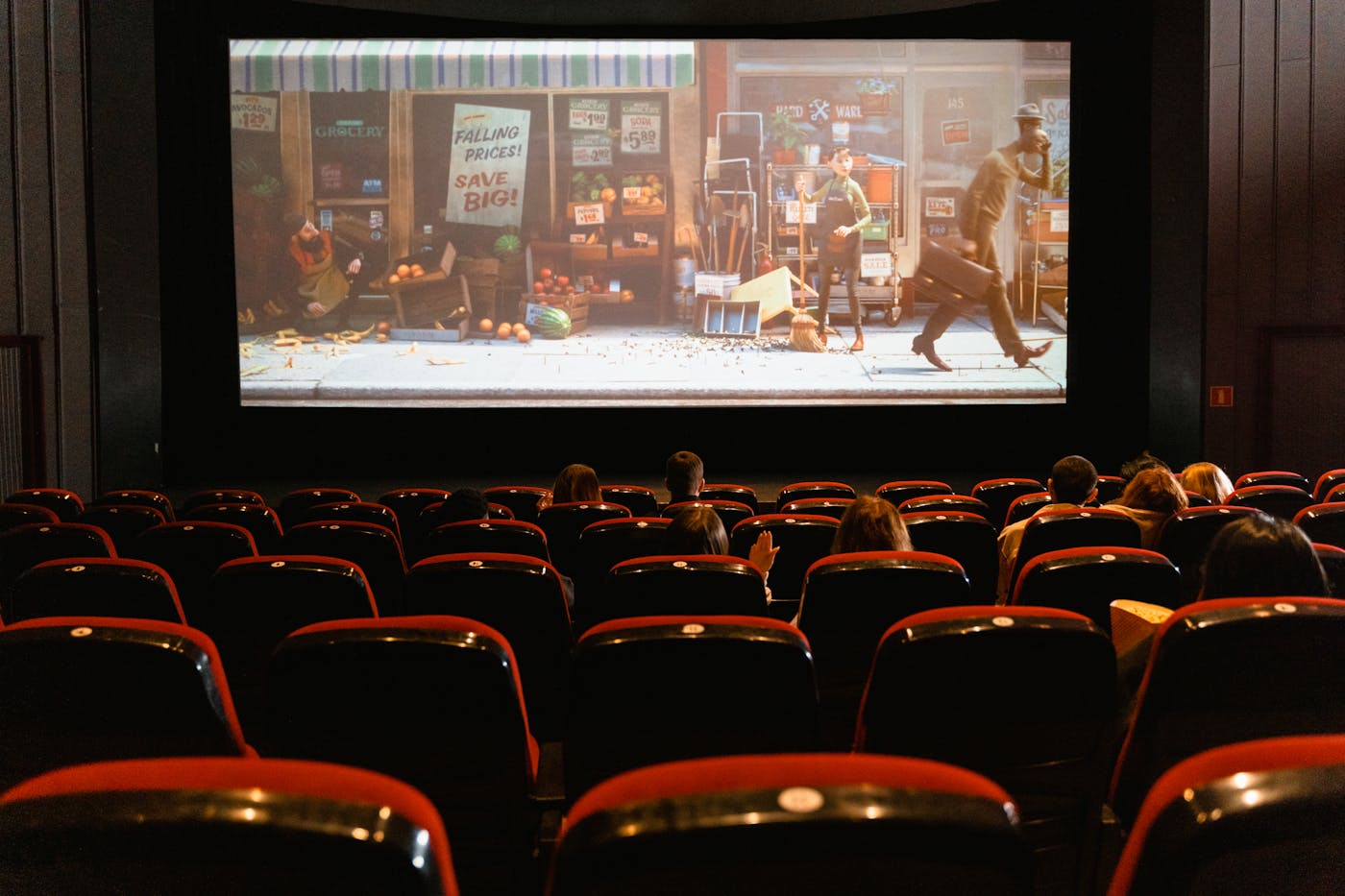
People at a cinema or screening event watching a film
Lesson preview

Analyse films, defend opinions, and debate style versus substance

This lesson helps learners discuss cinema and television with more precision, using critical vocabulary, hedged opinions, and structured argument. The first page sets the tone with a stronger visual introduction.

B2CEFR level
40 minInteractive lesson
6 stagesFilm discussion flow

Discuss with your partner:

1. Can a film be both critically acclaimed and genuinely entertaining? Or does artistic ambition often come at the cost of accessibility?

2. What distinguishes a director's personal vision from a commercially driven product? Does it matter to you as a viewer?

3. Is prestige television — long-form TV drama with cinematic production values — a superior storytelling format to feature films? Why or why not?

Teacher note: At B2 the focus shifts to critical analysis: cinematic technique (cinematography, mise-en-scène, non-linear narrative), cultural significance, auteur theory, and nuanced hedged opinion. Students should be able to argue a position, acknowledge counterarguments, and use register-appropriate language throughout.

Today's scenario — a post-screening discussion at a film society meeting:

Student A — Advocate

You believe the film you just watched (Parallax — a fictional art-house thriller) is a masterpiece of contemporary cinema. You want to argue its case: its non-linear structure, visual symbolism, and moral ambiguity elevate it beyond genre filmmaking.

Student B — Sceptic

You found Parallax self-indulgent and inaccessible. You respect the craft but feel the film prioritises style over substance. You want to challenge the notion that deliberate obscurity equals artistic merit.

Film criticismAuteur theoryHedged argument
5 min
Stage 2 — Vocabulary
Advanced film criticism vocabulary
10 minutes · Gap-fill exercise
Click a word from the box, then click a blank. Hover for definitions. These terms appear in quality film journalism and criticism.

Complete the sentences with the correct word from the box.

10 min
Stage 3 — Functional language
Critical and analytical language for film
8 minutes · Study and practise
8 min
Stage 4 — Language in use
B2 film criticism language drill
10 minutes · Multiple choice
10 min
Stage 5 — Role play
The post-screening debate
12 minutes · Pair work
How to use: Student A defends the film as a work of art. Student B argues it is self-indulgent. Both must use specific cinematic language, acknowledge each other's arguments fairly, and use hedged opinion structures throughout. Avoid simple "I liked it / I didn't like it" language entirely.
12 min
Stage 6 — Summary
Lesson complete!
5 minutes · Review