CONNECT
Workplace Safety: Slips, Trips and Falls
B1 video lesson on workplace accidents, injuries, hazards and simple safety advice.
Lesson Overview
Students watch a workplace safety video about slips, trips and falls. The lesson practises B1 language for accidents, injuries, workplace hazards and simple safety advice.
Before you watch
- What things can make people fall at work?
- Which workplaces are more dangerous: offices, factories or construction sites?
- What safety rules do people sometimes ignore?
Prep
Drag the correct ending into each gap.
Mixed answer options
people can see clearly there.they tell the company about a safety problem.their foot slides and they lose balance.people cannot walk through it easily.accidents are more likely.they hit their foot on something and fall.Watch the Video
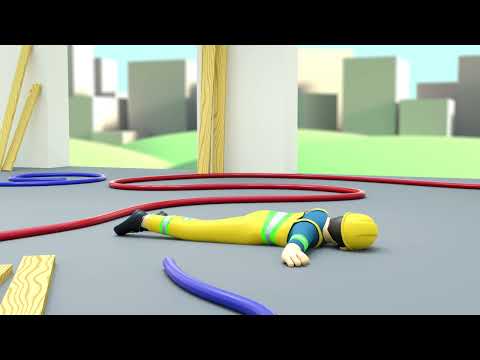
Watch the full video once from beginning to end. Focus on the causes of slips, trips and falls, the injuries they can cause, and the safety advice at the end.
 Open full video
Comprehension
Click each question to reveal the answer.
Vocabulary from the Video
More than 20,000 accidents happen at every year.
People can strain, sprain or fracture their arms or .
A dark car park can be .
Do not block floors and access .
Good lighting improves workplace .
Always report any that you notice.
Mixed options
routesdangerousworkdangerslegssafetyVocabulary Review
| Word / phrase | Meaning | Example |
|---|---|---|
| slip | to slide accidentally and lose balance | He slipped on the floor. |
| trip | to hit your foot on something and fall | She tripped over a cable. |
| fall | to go down suddenly to the ground | He fell down the stairs. |
| strain | to hurt a muscle by using it too much | He strained his back. |
| sprain | to hurt a joint by twisting it | He sprained his knee. |
| fracture | to break a bone | She fractured her arm. |
| fatal | causing death | A blow to the head can be fatal. |
| passageway | a place where people walk through | Do not block the passageway. |
| access route | a way into or through a place | Keep access routes clear. |
| risk assessment | a check for possible dangers | Risk assessments help identify dangerous places. |
| safety measures | actions that reduce danger | Good lighting is a safety measure. |
| handrail | a rail people hold on stairs | Use the handrail on the stairs. |
| slip-resistant | designed to stop slipping | Slip-resistant floors improve safety. |
| report a danger | tell someone about a risk | Report a danger when you notice it. |
Collocations
slips, trips and
days off
a flight of
a dark car
access
suitable
Mixed options
stairsroutesfallsshoesparkworkPhrasal Verb Questions
What can happen if workers fall the stairs?
Why should employees clean dangerous areas?
What should workers pick from the floor?
Why should people slow when they are in a hurry?
What dangers should workers look in the workplace?
Mixed options
upout fordowndownupB1 Grammar: Imperatives for Safety Advice
We use imperatives to give clear instructions and safety rules.
| Positive imperative | Negative imperative |
|---|---|
| Wear suitable shoes. | Don’t block access routes. |
| Report dangers. | Don’t leave cables on the floor. |
| Keep your eyes open. | Don’t hurry on stairs. |
Grammar Exercise 1: Complete the safety rules
suitable shoes for the weather.
access routes clear.
any dangers you notice.
floors or passageways.
cables on the ground.
Mixed options
Don’t blockKeepDon’t leaveWearReportGrammar Exercise 2: Error Correction
Click each sentence to reveal the correction.
Grammar Exercise 3: Sentence Transformations
You should wear suitable shoes.
You should not block access routes.
You should report dangers.
Discussion
- What is the most common cause of falls at work?
- Why do people sometimes leave things on the floor?
- What should a company do if a passageway is blocked?
- Why is good lighting important?
- What kind of shoes are safe for your workplace?
- Why are accidents more likely when people are in a hurry?
- What dangers should workers report immediately?
Useful Language
| Giving advice | Explaining danger | Agreeing |
|---|---|---|
| You should... Don’t... It’s important to... | This is dangerous because... Someone could... | I agree because... That’s a good point. |
Role Play: Workplace Safety Check
Student A: Safety Officer
Explain the dangers and give clear safety instructions using imperatives.
Student B: Team Leader
Ask questions, explain why the problems happened and agree on actions to fix them.
Challenge
Use at least five phrases from the lesson: slip, trip, fall, access route, report dangers, clean up, look out for.
| Safety officer language | Team leader language |
|---|---|
| Don’t leave... Keep... clear. Report... | We can fix this by... The problem happened because... We will... |