CONNECT
Student Living Costs in Groningen
B1 video lesson on budgeting, expenses and student life in the Netherlands.
Lesson Overview
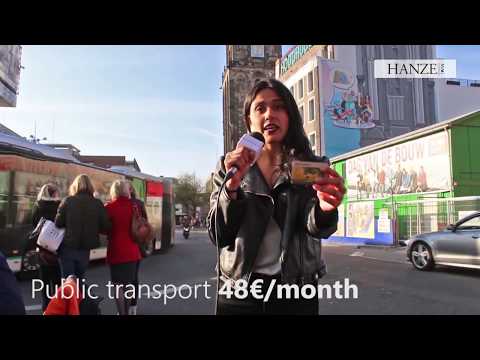
Students watch a short video about the cost of living for students in Groningen, the Netherlands. The lesson practises B1 language for monthly expenses, rent, groceries, transport, shopping and budgeting.
Before you watch
- What do students usually spend money on?
- Is it expensive to live in a student city?
- How can students save money every month?
Prep
Drag the correct ending into each gap.
Mixed answer options
you need a lot of money to live there.you use money to buy or pay for something.housing costs a lot each month.you buy food and everyday things.another person owned it before you.you remember to include those costs.Watch the Video
Watch the full video once. Focus on the different costs students mention and the advice for saving money.
 Open full video
Comprehension
Click each question to reveal the answer. Each question is synced to the video time.
Vocabulary from the Video
Living in the Netherlands can be quite .
Students spend an average of €800 per .
What do you spend most of your money ?
For housing, count on about €350 .
You can find many in the city.
The open-air market is in the city .
A second-hand bike costs around .
Keep mobile phone and health insurance in .
Mixed options
expensivemonthonaveragesupermarketscenter€50mindVocabulary Review
| Word / phrase | Meaning | Example |
|---|---|---|
| living costs | the money you need to live somewhere | Living costs are high in the Netherlands. |
| expensive | costing a lot of money | Groningen can be expensive. |
| spend | use money to pay for things | Students spend money on rent and food. |
| average | a typical amount | Students spend an average of €800. |
| rent | money paid every month for a room or flat | Rent is one of the biggest costs. |
| groceries | food and things bought regularly | Students buy groceries every week. |
| supermarket | a large shop that sells food | Jumbo is a supermarket. |
| open-air market | a market outside | You can save money at the open-air market. |
| city center | the central part of a city | The market is in the city center. |
| second-hand | used before by another person | Second-hand bikes are cheaper. |
| public transport | buses, trains and trams | Students use public transport. |
| bus ticket | a ticket for a bus journey | A bus ticket costs €2.50. |
| restaurant | a place where people pay to eat | Restaurants are expensive. |
| extra expenses | additional costs | Mobile phone and insurance are extra expenses. |
| health insurance | payment for healthcare protection | Students need health insurance. |
Collocations
monthly
student
daily
second-hand
public
health
Mixed options
housinginsurancetransportbikeexpensesgroceriesPhrasal Verb Questions
What do students spend most of their money ?
How can students save for rent?
What costs do students need to count every month?
Where can students look second-hand bikes?
What expenses should students keep ?
Mixed options
in mindonforuponB1 Grammar: How Much / How Many + Quantifiers
Use how much for uncountable nouns and money. Use how many for countable plural nouns. Use quantifiers to talk about amounts.
| Form | Use | Example |
|---|---|---|
| How much + uncountable noun? | ask about money or amounts | How much money do students spend? |
| How many + plural noun? | ask about number | How many supermarkets are there? |
| a lot of / many / some | talk about amount | There are many supermarkets. |
| a little / a bit / around | approximate amount | A bike costs around €50. |
Grammar Exercise 1: Complete the questions
How money do students spend?
How supermarkets are there?
Students spend €800 per month.
There are supermarkets in the city.
A second-hand bike costs €50.
Mixed options
manyaboutmucharoundmanyError Correction
Sentence Transformations
Ask about monthly spending.
Ask about supermarkets.
A bike costs €50.
Discussion
- What is the most expensive part of student life?
- How much money do you think a student needs every month?
- Is rent more expensive than food?
- How can students save money on groceries?
- Would you buy a second-hand bike?
- Is eating out a good idea for students?
- What extra expenses do international students need to remember?
Useful Language
| Asking about costs | Talking about money | Giving advice |
|---|---|---|
| How much does it cost? How much do you spend? | I spend around... Rent costs about... | You should... It’s cheaper to... Don’t forget... |
Role Play: Student Budget Advice
Student A: New International Student
Ask about rent, groceries, bikes, restaurants, transport and extra expenses.
Student B: Student Guide
Give advice using approximate prices and ways to save money.
Challenge
Use: How much, around, rent, groceries, second-hand bike, public transport, health insurance.